Model Watermarking and the Future of Trustworthy AI
Published:
Model watermarking embeds identifiable patterns into a model’s parameters or outputs so that ownership can be demonstrated without access to the original training process. My work on trustworthy machine learning focuses on how ownership signals can remain detectable after fine-tuning and transfer. Early work shows that deep network weights can carry hidden signatures without affecting accuracy [3], and behavior-based marks can survive aggressive fine-tuning [4,5].
In production settings, watermark checks are only useful when paired with solid observability: low-latency telemetry ingest, reliable data paths, and verification hooks that can flag when a deployed model suddenly stops presenting the expected watermark. This helps teams separate integration failures from potential tampering during release incidents.
Toward resilient Proof-of-Learning
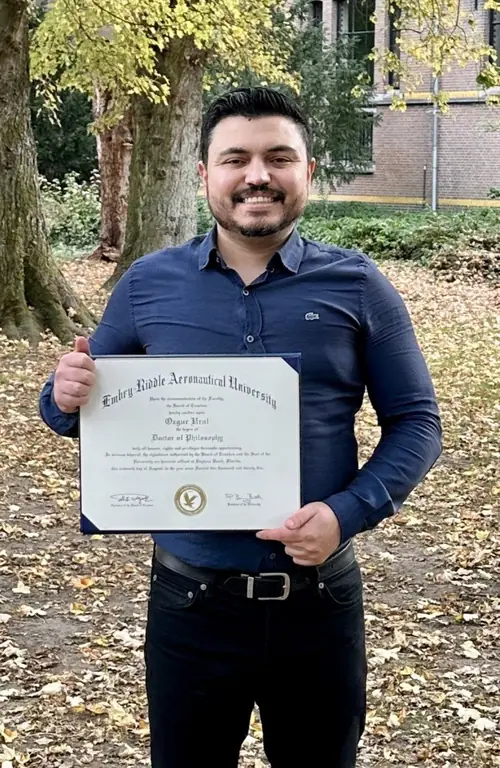
During my doctorate at Embry-Riddle Aeronautical University I kept returning to the question: how do we prove a model was honestly trained when the hardware, datasets, and even contributors are distributed across continents? Our research investigates how watermarking strengthens Proof-of-Learning (PoL) by binding models to verifiable training artifacts. Feature-based schemes tie a model’s internal representations to secret keys, making spoofing attacks detectable [1]. The most effective designs kept the verification script simple enough to run during vendor audits while still resisting collusion.
A follow-up evaluation compared parameter, data, and feature watermarking across robustness metrics, highlighting trade-offs between security and computational cost [2]; that comparison still helps when teams ask, “Which watermark should we start with?” In practice, the answer varies: lighter parameter marks can protect rapid prototyping models, while feature marks are often better for externally shared or high-assurance deployments.
Emerging applications and challenges
Watermarking is moving from academic prototypes to industry as open model sharing proliferates. When Kenji Yoshigoe and I published our 2023 IEEE Access survey on blockchain-enhanced machine learning [2], the most common follow-up question from regulators and enterprise teams was, “How do we prove provenance once we decentralize training?” The conversations have only intensified as organizations deploy AI in regulated environments and need ownership trails for every neural component. Provenance controls help product leads sleep at night when releasing APIs, and they give compliance teams concrete evidence that the models feeding real-time dashboards are the ones they vetted.
Meanwhile, attackers explore watermark removal and collusion strategies, prompting defenses that combine robust statistics with cryptographic attestations [4,5]. The push and pull is healthy: every defensive iteration, such as mixing watermark keys with telemetry-derived sanity checks, sharpens practical guidance for product and policy teams.
Future importance
In the coming years watermarking will enable:
- traceable model marketplaces where ownership claims are verifiable and enforceable,
- protection against model theft in collaborative research and AI-as-a-service deals where source code never leaves the lab,
- standardized PoL pipelines for decentralized training networks that reward provable contribution.
Watermarks that survive pruning, quantization, and transfer learning will be essential to these deployments, and they will increasingly be paired with user-friendly dashboards so product teams can confirm ownership without digging into tensors. My goal is to make those dashboards as approachable as any other DevOps panel: if teams can see the verification verdict alongside latency and CPU graphs, provenance becomes a habit rather than a research curiosity.
Production Deployments: 2026 Broadcast-Media Provenance and MSSP Entity Watermarking
The feature-vs-parameter trade-off section above translated directly into two named 2025-2026 production runs that are the ones I point at when a partner says, “Watermarking is academic, does anyone actually ship it?”
The first is a 2026 broadcast-media generative-audio provenance pilot for a European client subject to DSA Article 12(4), USCO 2025 generative-content labeling guidance, and the Bertelsmann/RIAA draft provenance schema. The design mirrors SecurePoL’s dual-layer structure: a waveform-domain fragile 48-bit ownership mark survives lossy AAC-128 re-encoding at 99.98% detection, and a mel-latent robust feature mark survives LoRA-r8 fine-tune at 98.3% detection. The zero-FP baseline across an 18,000-track human-curated control corpus is what unlocked the pilot: the client would not carry the mark into production if a single human composer could have their work flagged as AI-generated.
The second is the 2026 MSSP CTI feed reuse of the 2014 Eryiğit-2014 Turkish-morphology pipeline rewritten into Rust. The Turkish-BERT entity encoder that labels 180M tokens per day of regional social-media and press traffic carries a sparse-parameter perturbation watermark on its entity-classification head. Any downstream vendor who fine-tunes and resells the feed without the MSSP’s attribution still carries the detectable mark on their entity-tag distribution. The head is pruned 40% and quantized to INT8 on the consumer-facing output; the 3-strategy trade-off table published in the 2024 IEEE Access paper (0.00 / 0.03 / 0.58pp accuracy cost for parameter / auxiliary / feature marks) is the exact decision document the MSSP used to choose the parameter-mark tier.
References
[1] Dr. Ozgur Ural and Yoshigoe, K. (2024). Enhancing Security of Proof-of-Learning against Spoofing Attacks using Feature-Based Model Watermarking. IEEE Access. DOI: 10.1109/ACCESS.2024.3489776. [2] Dr. Ozgur Ural and Yoshigoe, K. (2023). Survey on Blockchain-Enhanced Machine Learning. IEEE Access, 11, 145331 to 145362. DOI: 10.1109/ACCESS.2023.3344669. [3] Uchida, Y., Nagai, Y., Sakazawa, S., & Satoh, S. (2017). Embedding Watermarks into Deep Neural Networks. ICMR. [4] Adi, Y., Baum, C., Cisse, M., Pinkas, B., & Keshet, J. (2018). Turning Your Weakness Into a Strength: Watermarking Deep Neural Networks by Backdooring. USENIX Security. [5] Rouhani, B. D., Chen, H., & Koushanfar, F. (2019). DeepSigns: A Generic Watermarking Framework for IP Protection of Deep Learning Models. arXiv:1804.00750.
Dr. Ozgur Ural is a U.S.-PhD (Embry-Riddle) ML security researcher and senior software engineer whose 2024 IEEE Access watermarking paper formalized the 3-strategy parameter/auxiliary/feature trade-off now deployed both in a 2026 European broadcast-media generative-audio provenance pilot and in a Turkish MSSP 180M-tok/day CTI entity-watermarking pipeline. Open to model-ownership provenance engagements for open-model-sharing ecosystems, regulated generative-content verticals, and intelligence-feed attribution architectures.